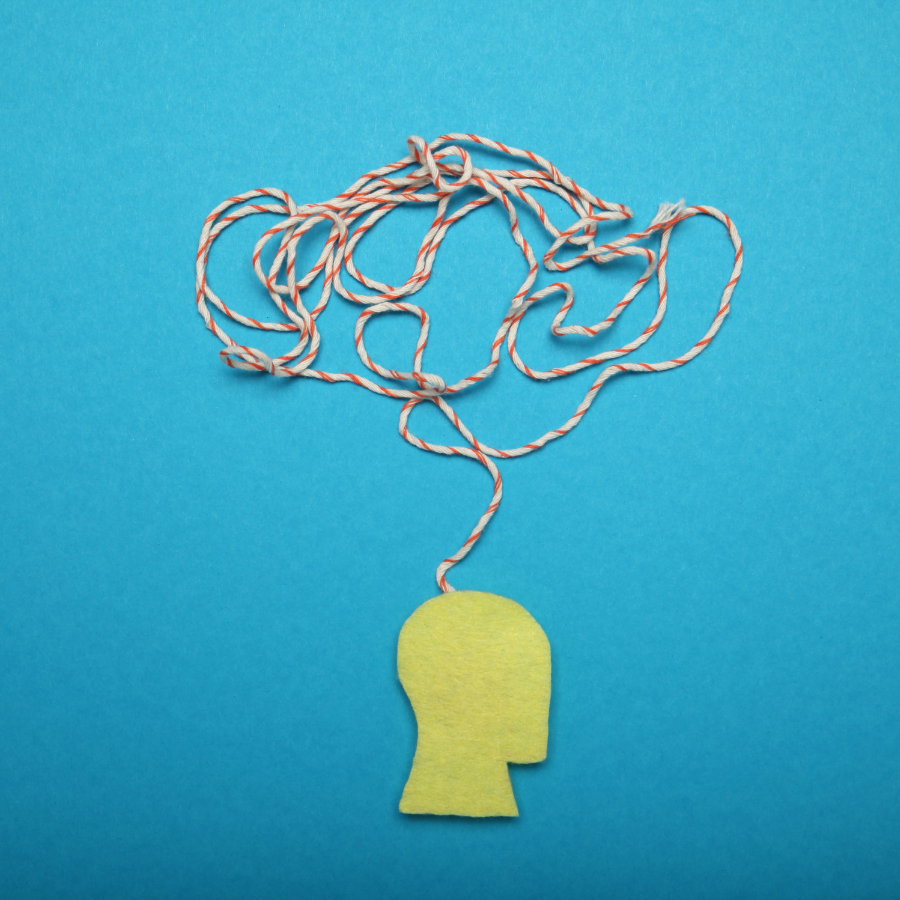
 Years ago, a Linked:HR member, Dr. Gordon Curphy, asked an interesting question: Are there personality traits that allow us to find "team killers" - people who destroy the morale of a team? Dr. Curphy's question got me thinking: Are there traits on the Big Five that would allow us to predict organizational gremlins? I'm talking about people whose general behaviors would make most people uncomfortable - perhaps people who are abrasive, rude, arrogant and yes, unethical. Yikes. Have you ever worked with someone like that?
As I attempted to answer his question, however, I hesitated. I could see all sorts of problems in trying to "identify" a nightmare simply using "Big Five" personality traits. Here are just a few: Nightmares are Relative Nightmarish tendencies could lie in the eye of the beholder! I could call "arrogant" someone whom others see as "charismatic." A "rude" person could simply be more direct than I am or disagree with me on a variety of key areas. How about unethical? That's tougher but still possibly relative - I could judge as "unethical" behaviors that others would find perfectly reasonable. More importantly, I might be more likely to judge as "unethical" something that might damage my interests. In other words: Possibly, differences between my personality and the personality of the nightmare in question govern my own perceptions. Nightmares have Mirrors Maybe I'm the nightmare... or at least part of it! For instance, if two people are equally low in agreeableness (challengers, people more likely to stick to their goals) and equally high in neuroticism (in other words, both are rather nervous), they will probably disagree vehemently. Who is the nightmare then? Both of them? Nightmares bring Gifts A "nightmare" could actually bring something good to the table. For instance, a tad of arrogance could work well if it translates to the outside world as rightful pride in the organization. The same person who is perceived as "abrasive" to the team could sell this same team beautifully to outside clients. Unless the situation is extreme (or perhaps even pathological) a combination of personality traits is unlikely to be all bad under all circumstances. Nightmares are Complex Finally, a "nightmare recipe" may require more than traits. Instead, nightmares may require an explosive combination of traits, values, and motivations. Case in point: Consider someone who is ultra high in neuroticism (i.e., reactive, nervous, and prone to anger), ultra low in agreeableness (a challenging "limelight seeker"), ultra low in trust and tact, somewhat dry and unfriendly, and ultra high in need to "take charge" and in perfectionism. Before you say "ouch," however, consider the possibility that this same person is exquisitely self-aware, having participated in countless coaching sessions and in 360 exercises. As a result, this person may have learned to compensate for his/her tougher tendencies. Further, this person's goals and values could serve as powerful motivators to control his/her behaviors. After all, the relationship between traits and behavior is not that perfect - two people with similar trait tendencies may still behave differently (for a better review of "additional layers" impacting behaviors, the reader is directed to the fabulous work of Dr. Dan McAdams). In summary - diagnosing nightmares is far from simple. Even if everyone in the team agreed that person X is a nightmare he/she could still have important redeeming values - or, alternatively, something in the system could be exacerbating someone's natural tendencies. Perhaps, therefore, our thinking on this topic might go beyond "how to diagnose a nightmare." We could also figure out how to diagnose nightmarish conditions (does the system bring the "worst" in everyone?) and relationships (how incompatible is this particular team?). We might also learn how to best communicate about nightmares. How can a team member approach a colleague and say "Houston, we have a problem, now let's talk"?
0 Comments
Leave a Reply. |
About the Author
Dr. Cris Wildermuth is an Assistant Professor at Drake University, where she coordinates and teaches at the Master of Science in Leadership Development. Archives
January 2021
Categories
All
|

 RSS Feed